5 hr
Stein am Rhein & Rhine Falls Day Trip from Zurich
- Expert local guide
- Small group
- Skip-the-line access
- Free cancellation
Zurich to Rhine Falls — Direct Routes & Reserved Access
Europe's mightiest waterfall, just one train ride from the city
Compare fares, pick the fit — all bookings are mobile-voucher and eligible for free cancellation where shown.
5 hr
4 hr 30 min
4 hr
| Experience | From | Duration | Rating | Transfers | Small group | Free cancel. | Price | |
|---|---|---|---|---|---|---|---|---|
|
Guided Experience
Most popular
Stein am Rhein & Rhine Falls Day Trip from Zurich
|
Zurich | 5 hr | ★ 4.6 | ✓ | ✓ | ✓ | €75 | Book → |
|
Standard Entry
Rhine Falls & Swiss Scenic Journey from Zurich
|
Zurich | 4 hr 30 min | ★ 4.7 | ✓ | ✓ | ✓ | €52 | Book → |
|
Guided Experience
Rhine Falls Half-Day Tour from Zurich with Entry
|
Zurich | 4 hr | ★ 4.7 | — | ✓ | ✓ | €47 | Book → |
Worth it for the platforms and boat access
The zurich to rhine falls excursion delivers solid value once you understand what the 5 CHF conservation fee unlocks. That modest charge grants access to Schloss Laufen's viewing platforms—steel walkways that jut directly over Europe's most powerful waterfall, where 600 cubic meters of water thunder past every second. You'll feel the spray and roar from multiple vantage points, including the basin-level platform that puts you at the cascade's base. The fee also includes boat landing access, letting you step onto the central rock formation mid-falls if you purchase a separate boat ticket. Free viewpoints exist along the north bank, but they lack the immersive proximity the paid platforms provide. For visitors making the 50-minute train journey from Zurich, the conservation fee represents fair compensation for infrastructure that brings you within arm's reach of the Rhine's 150-meter-wide curtain. Budget travellers can skip it and still see the falls; everyone else benefits from the investment.
Bottom line: The 5 CHF fee turns a distant view into a tactile encounter with one of Europe's most powerful natural spectacles, justifying the modest cost for anyone who has travelled from Zurich specifically to experience the falls rather than simply photograph them.
Hand-picked experiences loved by thousands of travelers
7 hours
Free Cancellation
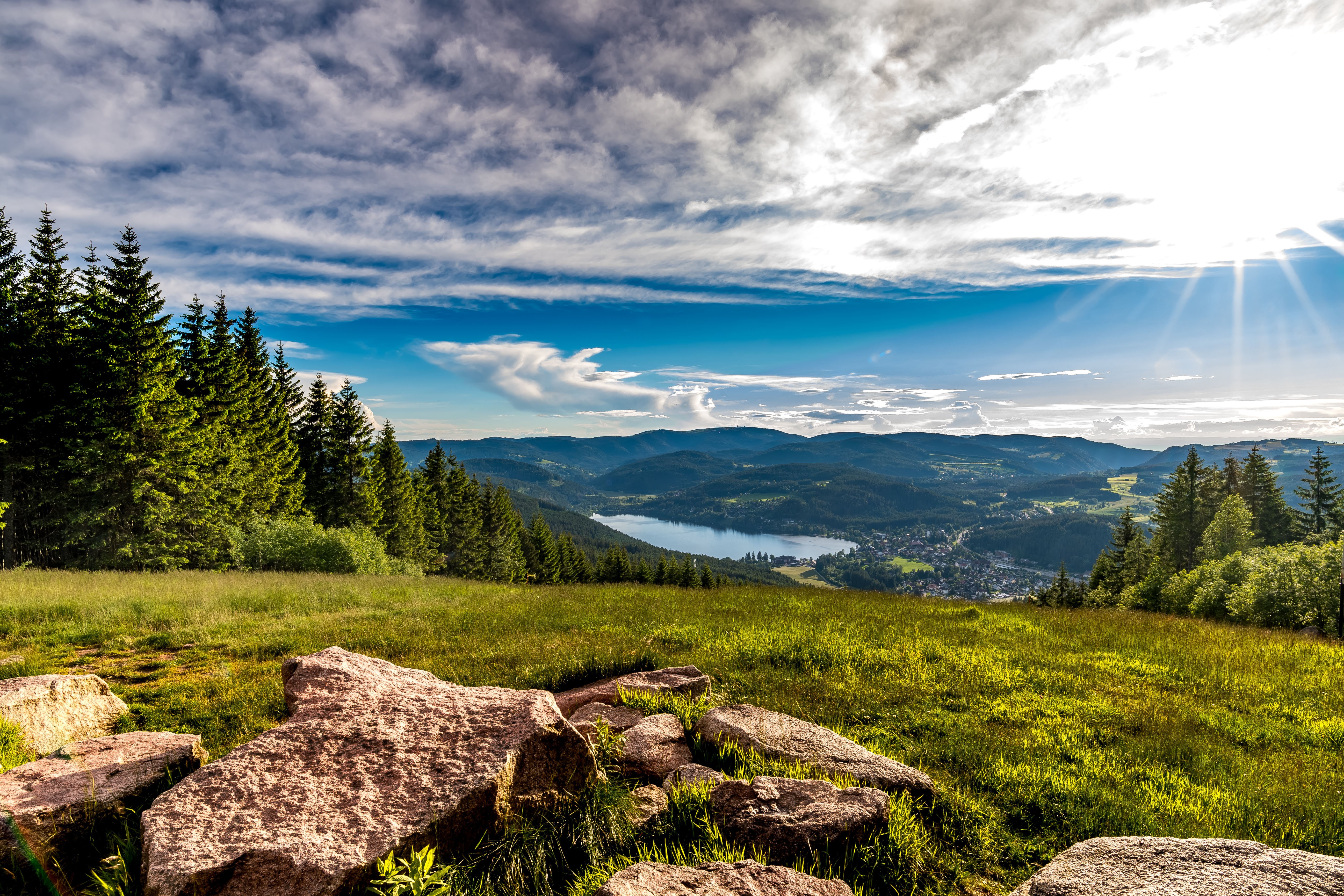
Explore Germany's Black Forest and Switzerland's mightiest waterfall on a guided coach excursion
12 hours
Free Cancellation
Full-day Swiss adventure combining Europe's mightiest waterfall with artisan chocolate and cheese tastings
5 hours
Free Cancellation
Visit Europe's mightiest waterfall, then cruise through Zurich's highlights on an open-air bus tour
10 hours
Free Cancellation
Private journey from Zürich or Lucerne to Europe's mightiest waterfall, a tranquil alpine lake, and Germany's legendary forest in one unforgettable day.
8 hours
Free Cancellation
Full-day adventure through Switzerland's largest city, alpine waterfalls, and chocolate paradise
8 hours
Free Cancellation
Full-day Swiss adventure blending city sights, chocolate heaven, Europe's mightiest waterfall, and a medieval gem
10 hours 30 minutes
Free Cancellation
Visit Switzerland, Germany, Austria and Liechtenstein in a single day with private transport and hotel pickup
4 hours
Free Cancellation
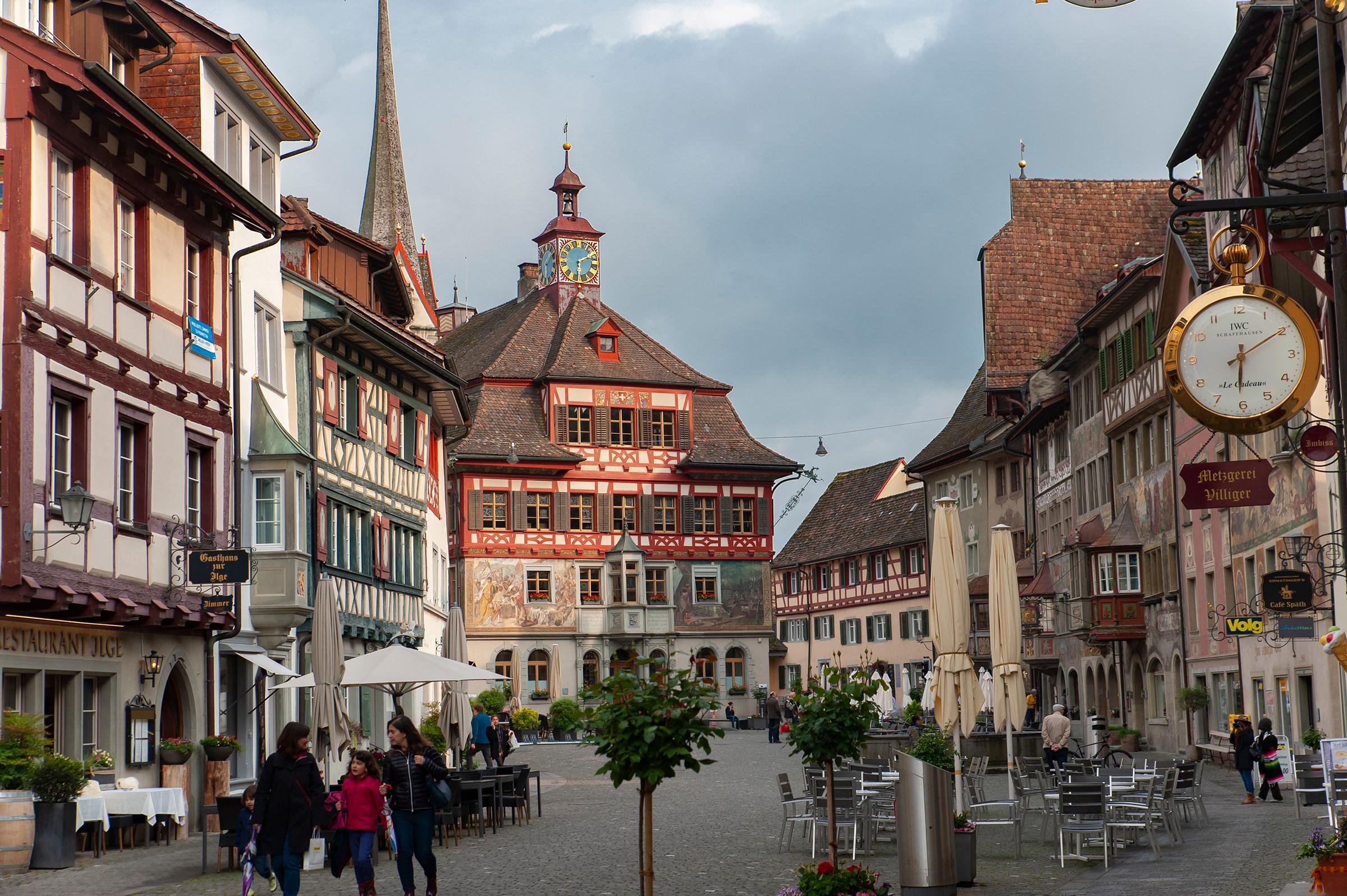
Witness Europe's mightiest waterfall and explore a charming medieval town on this scenic escape from Zurich.
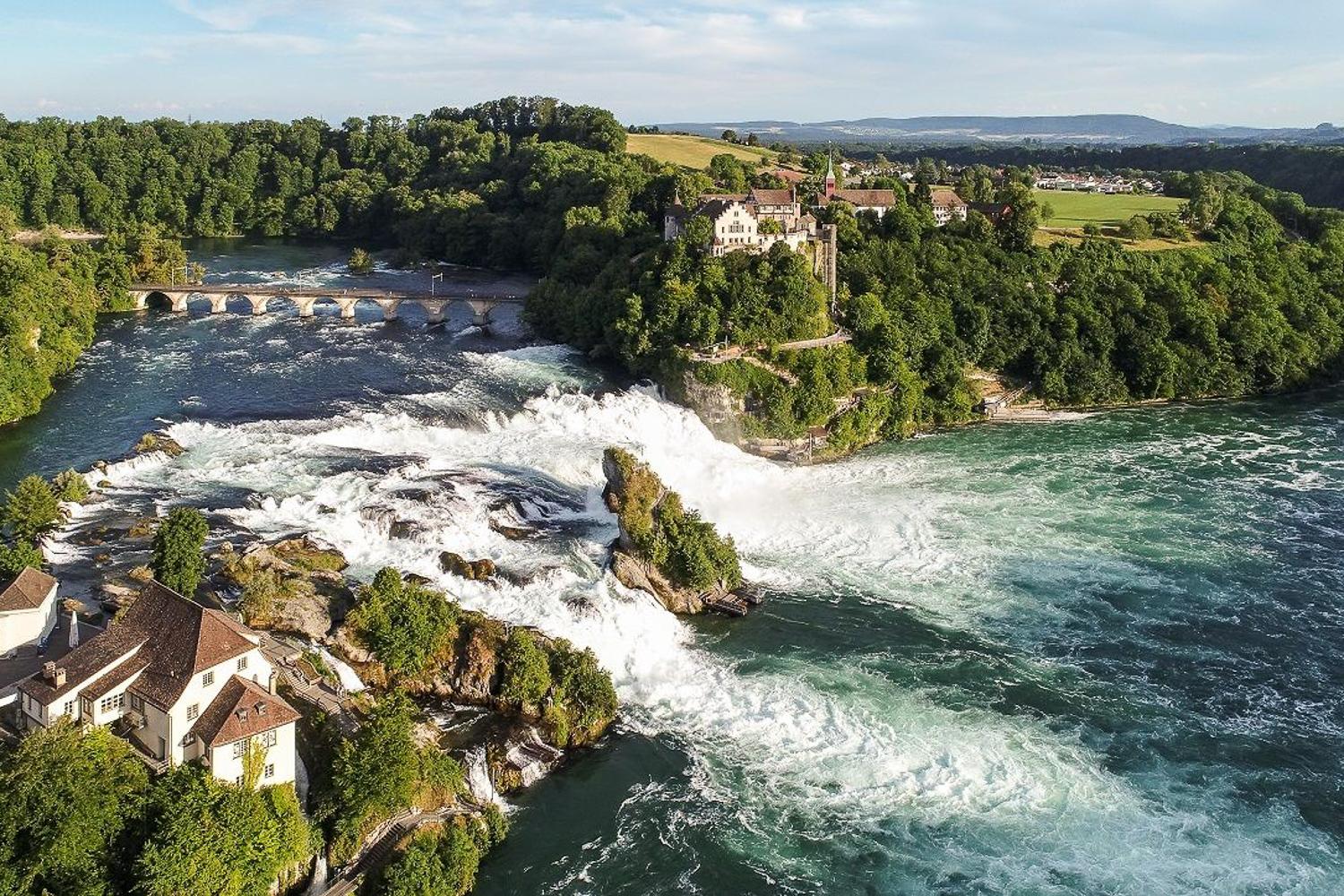
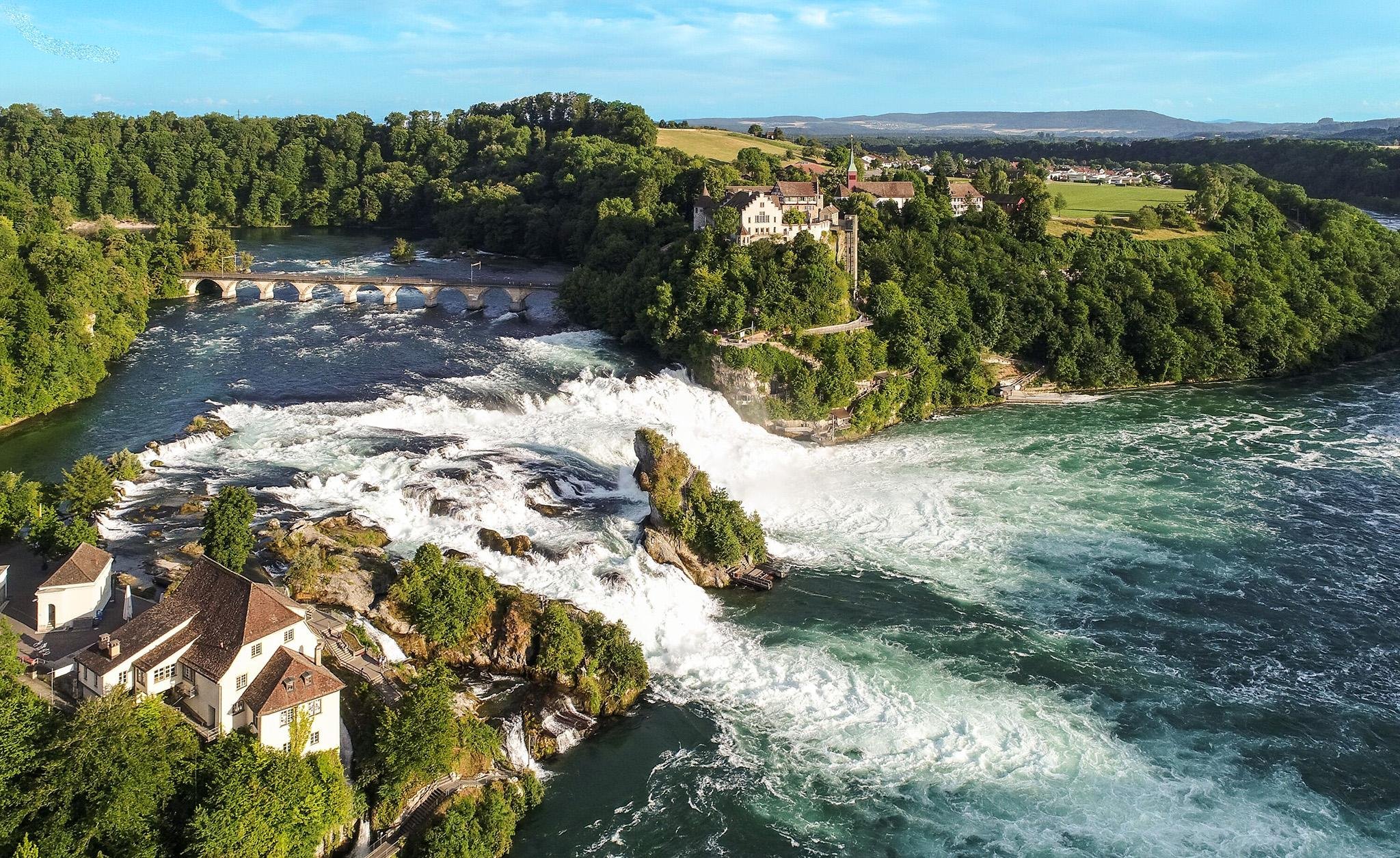
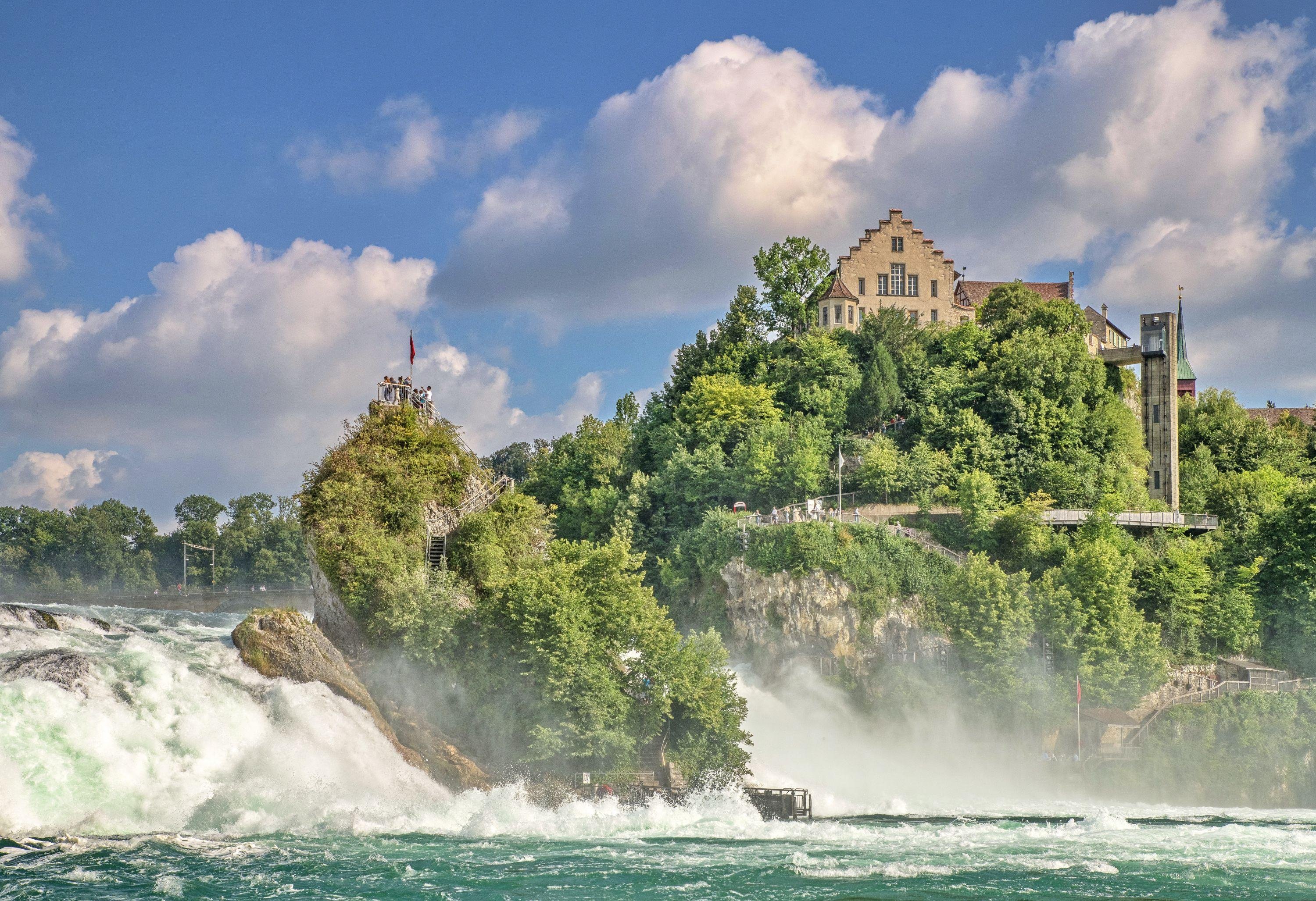
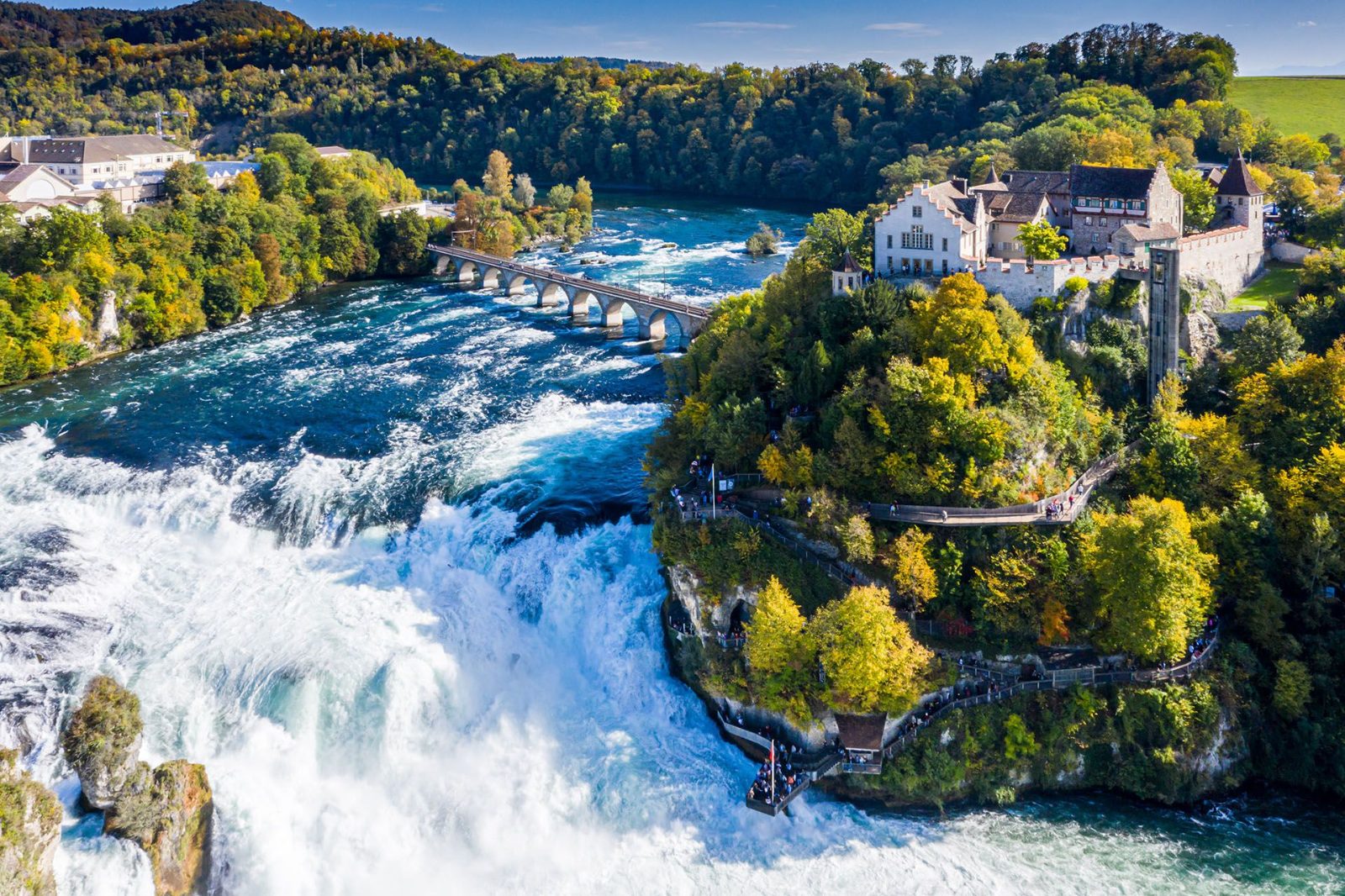
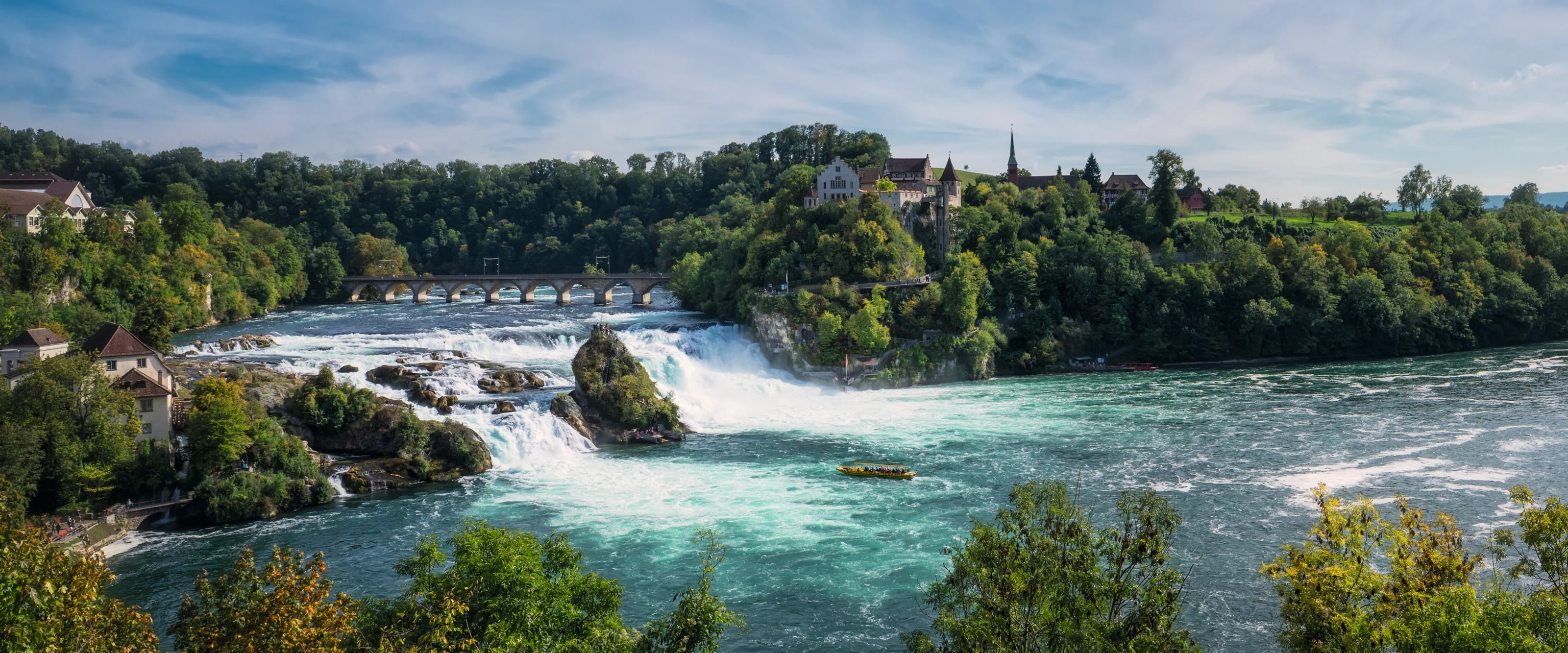
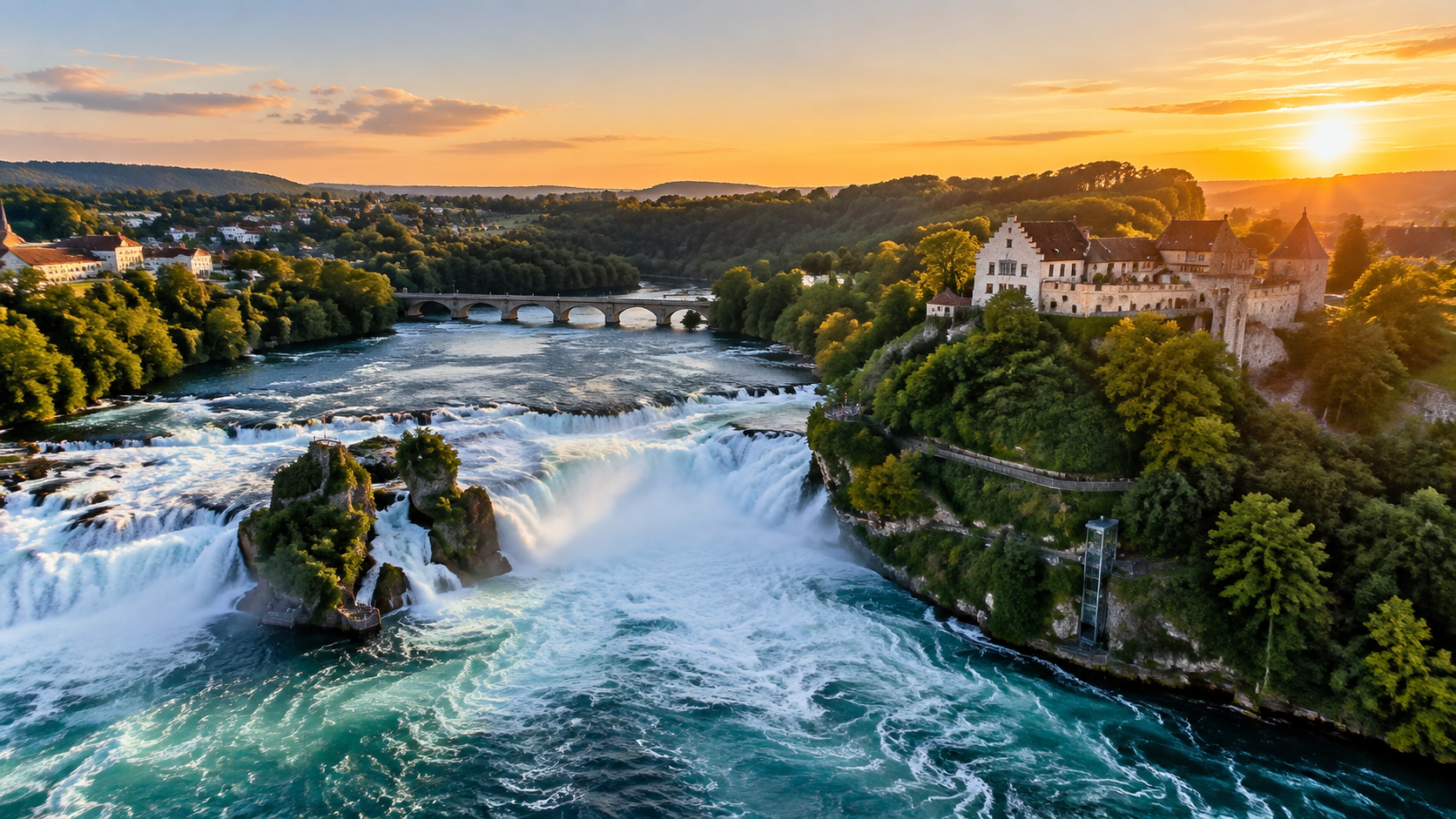
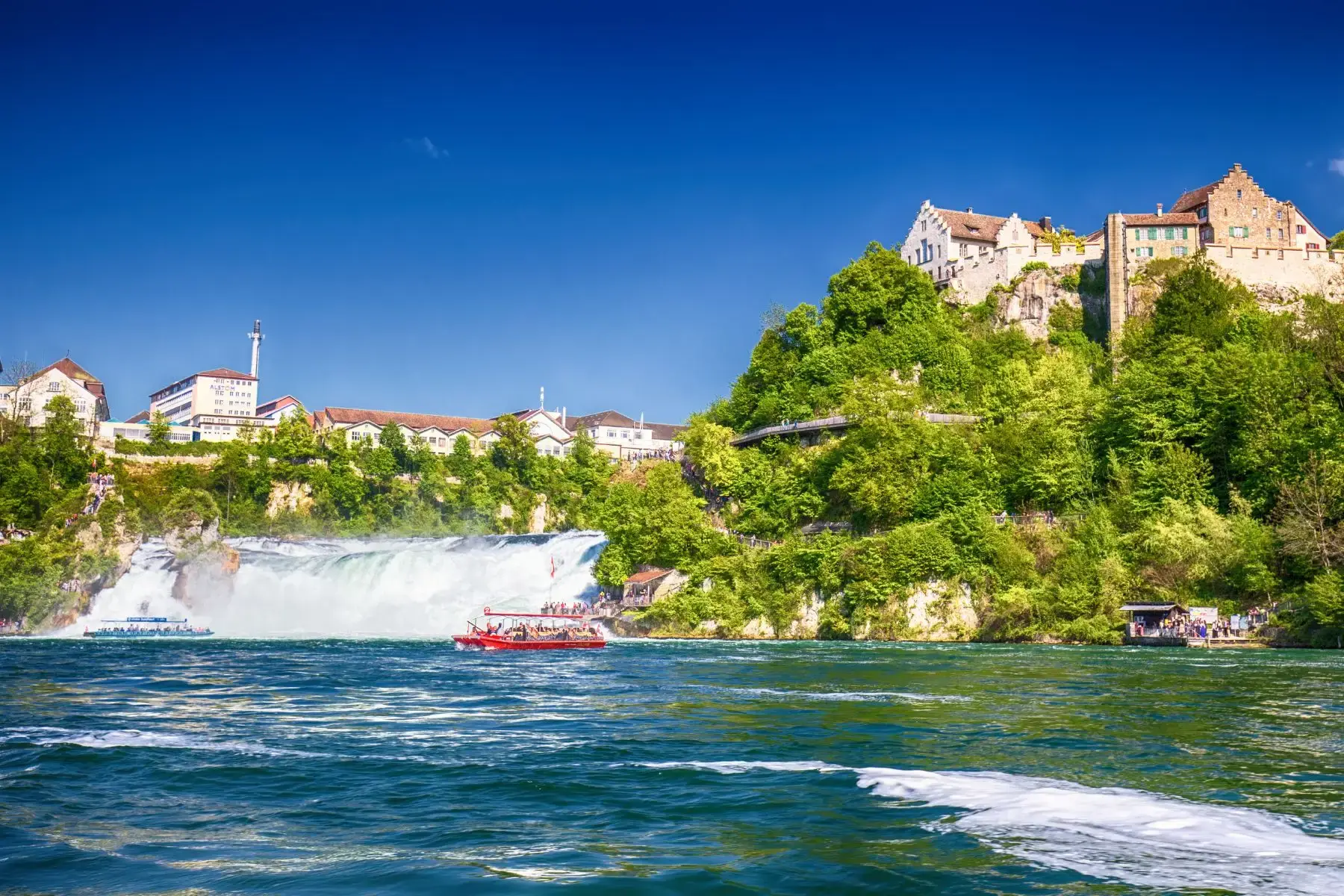
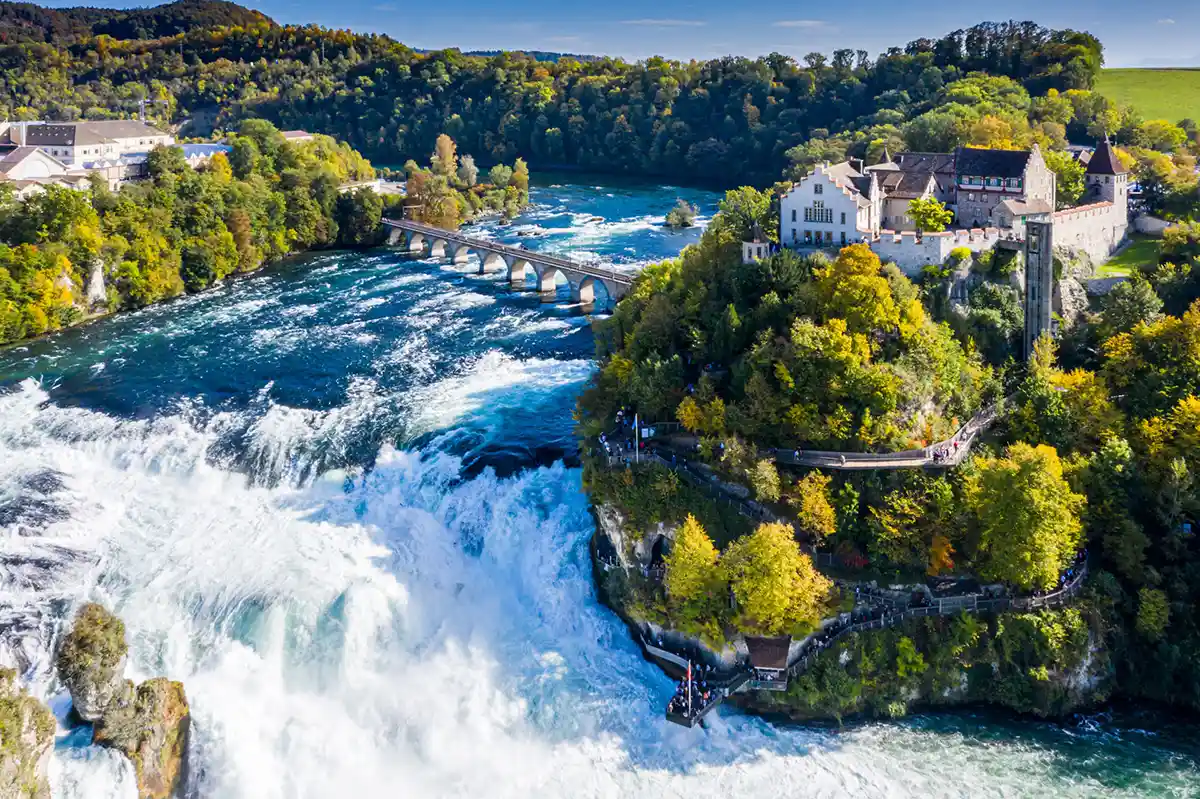
A historic castle overlooking the falls offering panoramic views and the Historama exhibition.
A scenic walkway on the south bank leading to prime viewing platforms for the Rhine Falls.
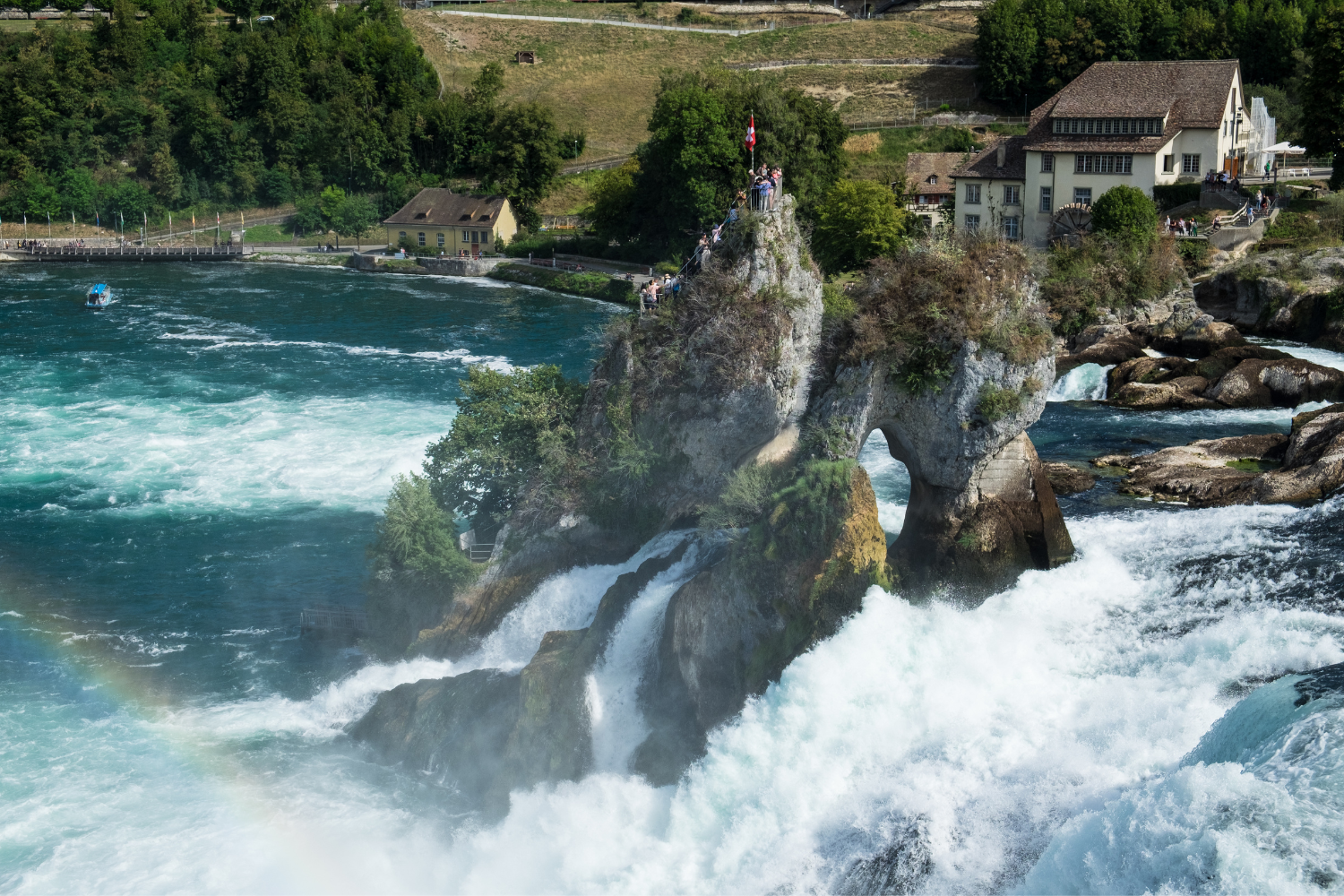
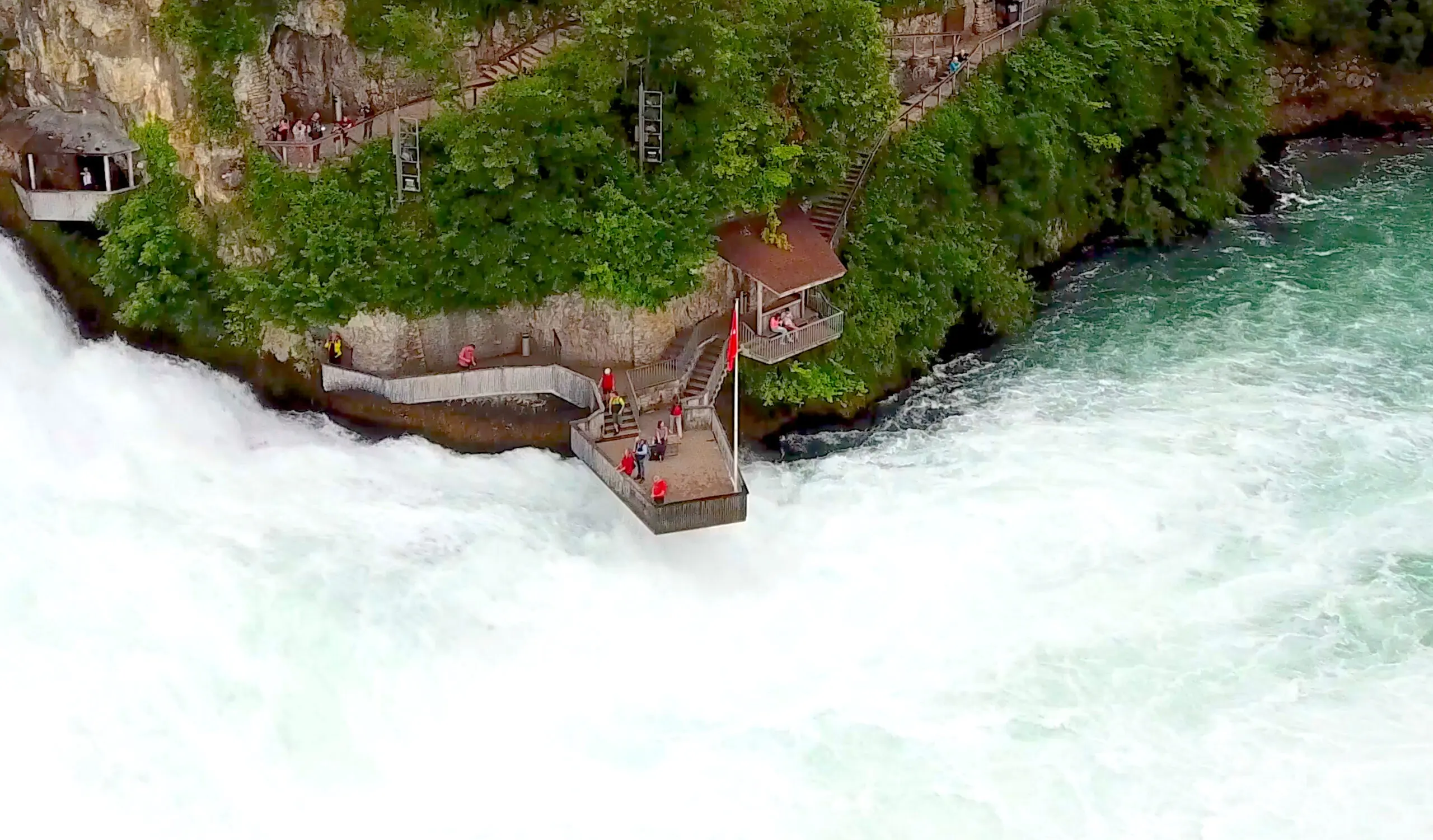
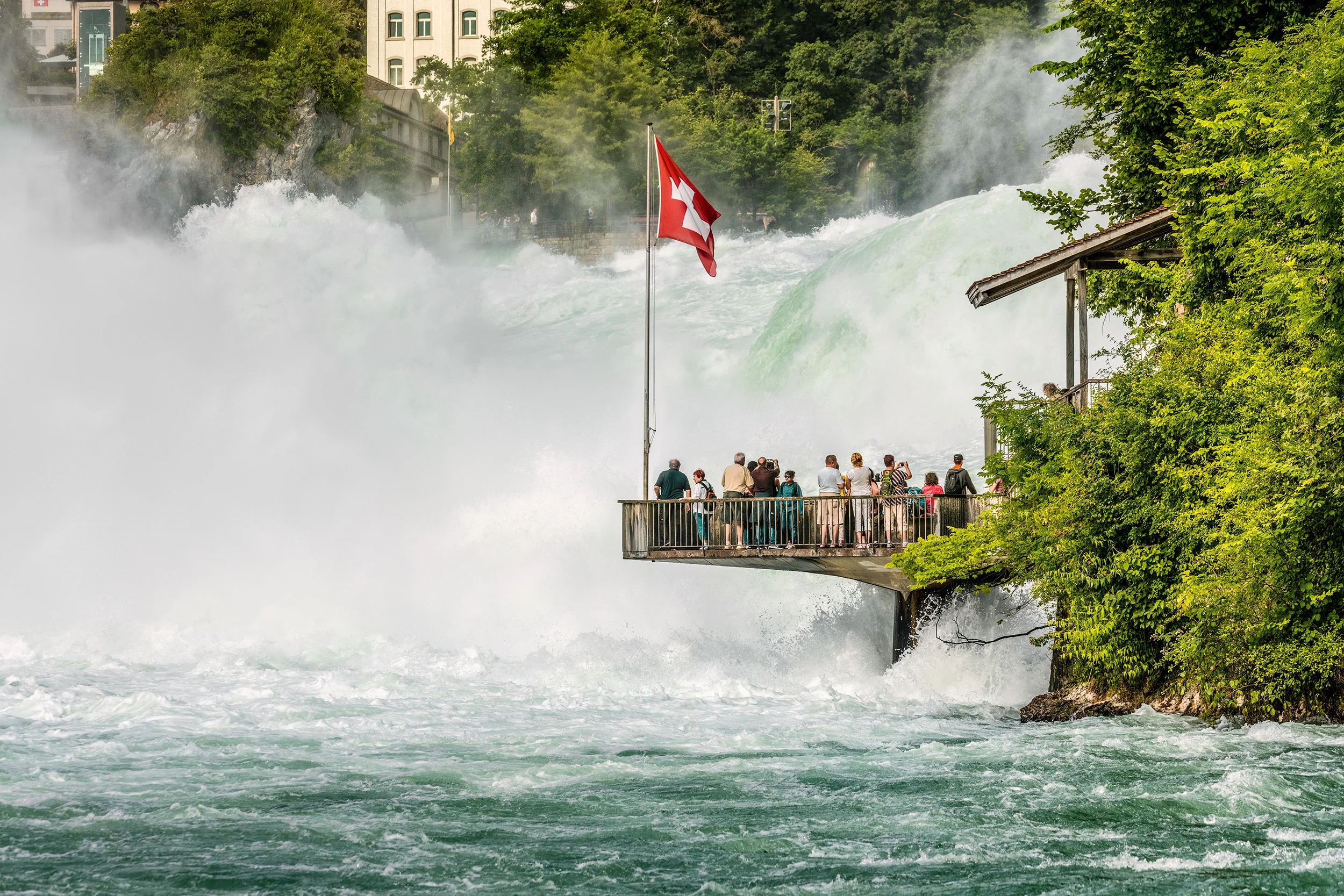
A dramatic viewpoint located directly above the crashing water, accessible via stairs.
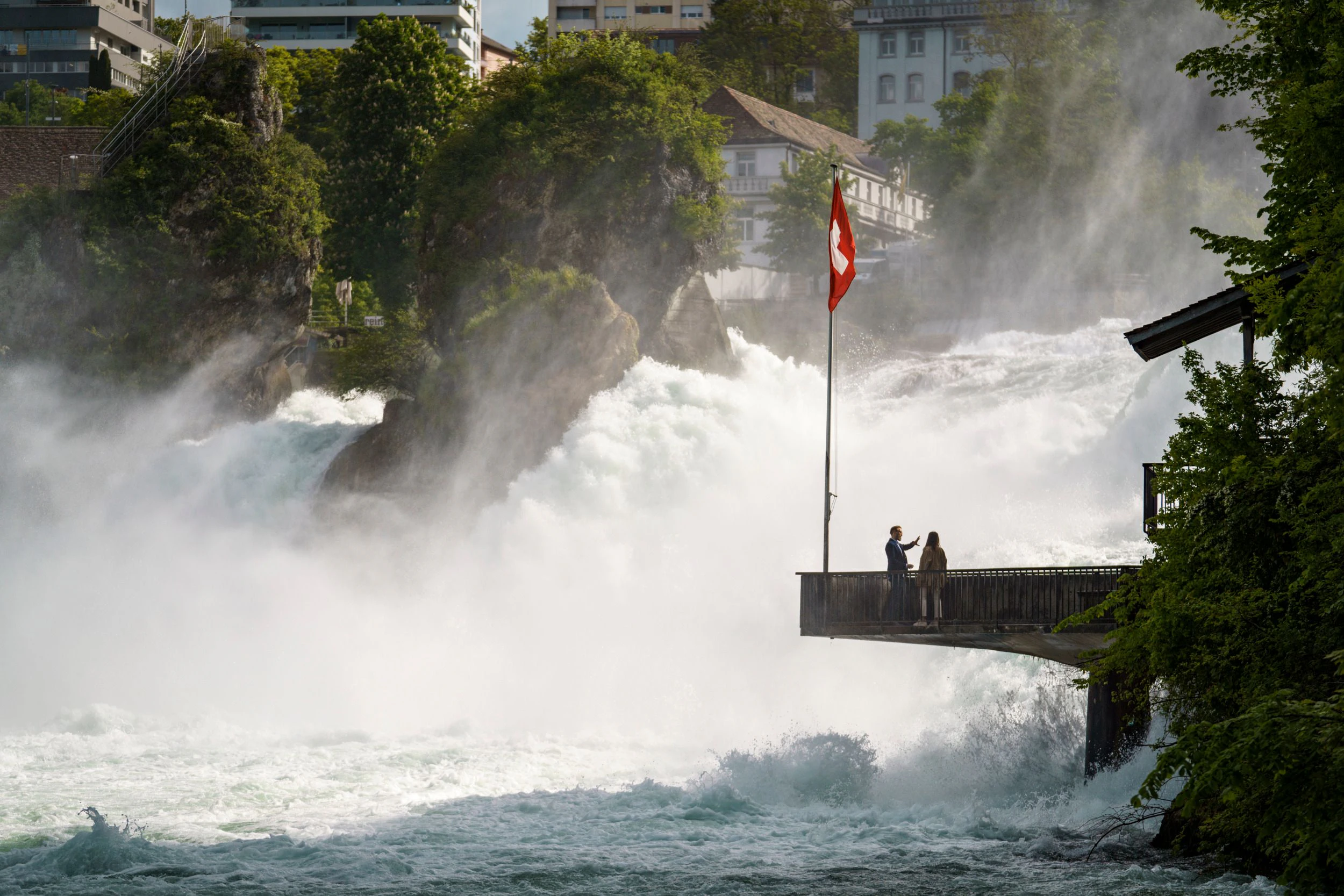
A low-lying viewing area that lets visitors get extremely close to the waterfall spray.
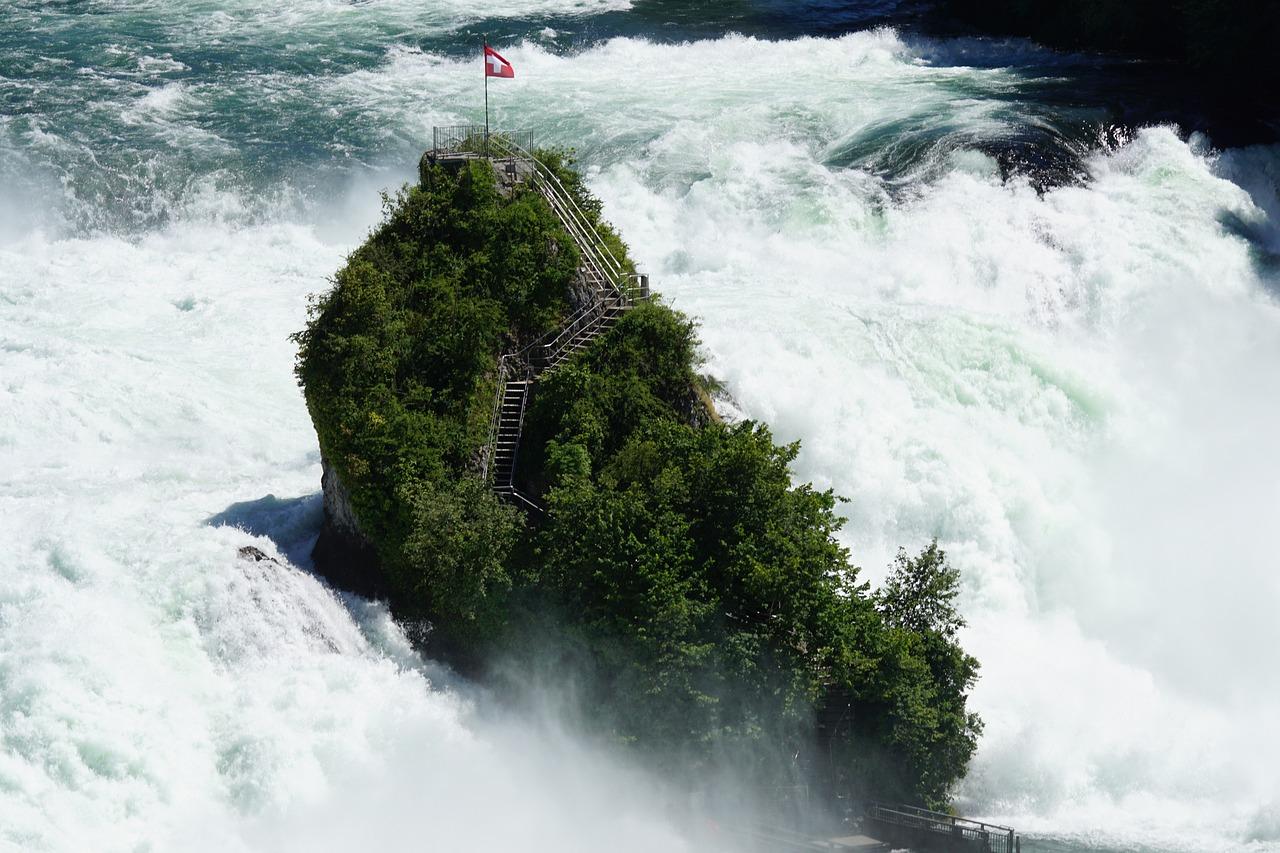
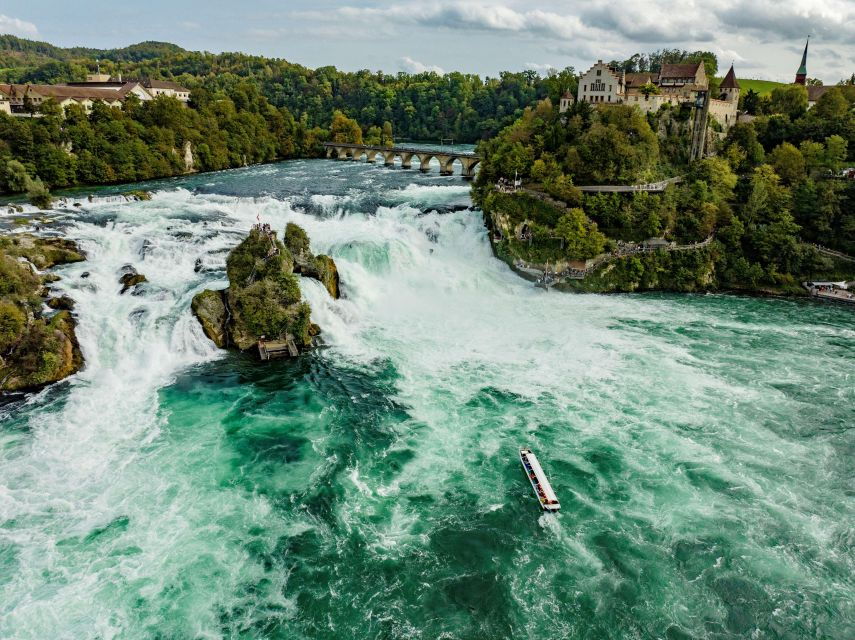
A natural rock island in the middle of the Rhine Falls accessible by boat.
You board the S9 at Zürich Hauptbahnhof, claiming a right-side window seat for unobstructed views as the train curves past Embrach and into the Rhine corridor.
Fifty minutes later, you step onto the platform at Neuhausen am Rheinfall, following yellow footpath signs downhill through residential streets that funnel pedestrian traffic toward Rheinfallquai. The roar builds before the water comes into view — a low-frequency rumble that vibrates handrails on the pedestrian bridge spanning the approach road.
You pay the five-franc conservation fee at Schloss Laufen's ticket kiosk, then descend a hundred stone steps to the Belvedere platform. Mist drifts in pulses, soaking your sleeves as you lean over the railing to photograph the central rock and its flagpole. A steel staircase drops another level to the Fischetz deck, where the plunge pool churns three metres below and rainbow halos flicker in the spray. You pause here, letting the thunder drown conversation, before climbing back to the castle terrace for a dry vantage point. The return train departs hourly from the same platform; ticket validators accept contactless payment and Swiss Travel Passes without supplementary charges.
All the details about your upcoming adventure in one place
The zurich to rhine falls route takes you to Europe's largest waterfall, where 150 cubic meters of water cascade over a 23-meter-high rock face every second. Travelers on zurich to rhine falls tours can explore viewing platforms on both banks, take a boat ride to the central rock formation, and walk the surrounding trails. The half-day excursion includes transport from Zurich and time at Laufen Castle, which overlooks the falls.
The Rhine Falls discharges 600 cubic metres of water per second during summer melt, forming a limestone shelf 150 metres wide and 23 metres high where the High Rhine breaks over Jurassic rock.
Geologists trace the cataract to the Würm glaciation 14,000 years ago, when retreating ice rerouted the river westward into its present channel. Medieval toll records confirm that Schloss Laufen, the twelfth-century castle perched on the south bank, collected levies from bargemen forced to portage around the falls. By 1857, engineers had blasted a footpath into the cliffs, and the Rheinfallbahn railway connected Neuhausen am Rheinfall to Winterthur, transforming a regional curiosity into Switzerland's most visited natural site.
The zurich to rhine falls train time averages fifty minutes on direct S-Bahn services departing Hauptbahnhof for Neuhausen am Rheinfall station, with the Swiss Pass covering the full fare. The zurich to rhine falls distance spans forty-seven kilometres along the Zürich–Schaffhausen corridor, a route that parallels the Rhine through terraced vineyards and timber-framed villages. Travelers opting for the zurich to rhine falls by car route follow the A4 motorway north to exit 45, though on-site parking at Rheinfallquai fills by mid-morning in high season. Bus connections via Schaffhausen add twenty minutes but serve visitors combining the falls with the medieval Altstadt upstream. A five-franc conservation fee at the Schloss Laufen entrance grants access to cantilevered platforms jutting over the torrent, where mist from the plunge pool coats steel railings and camera lenses alike.
Architectural interventions remain minimal. The Belvedere viewing deck, rebuilt in 1952 after flood damage, uses I-beams anchored into bedrock to support a hundred daily visitors without guardrail vibration. The Fischetz platform extends three metres beyond the cliff face, suspending observers directly above the cascade's eastern tongue. Boat landings on both banks allow passage to the central boulder, a glacial erratic crowned by a flagpole that tour operators reach via wooden skiffs. The zurich to rhine falls ticket price includes platform access from the castle side; northern bank entry via Schlössli Wörth remains free but offers fewer vantage angles. Lighting engineers installed submersible LEDs in 2015 for national-day illuminations, though naturalists argue the installations disturb roosting grey wagtails that nest in spray-zone crevices year-round.

The Rhine Falls discharges 600 cubic metres of water per second during summer melt, forming a limestone shelf 150 metres wide and 23 metres high where the High Rhine breaks over Jurassic rock.
Casual attire is recommended. Due to the proximity to the falls and potential for water spray, wearing a rain jacket or waterproof layer is highly advisable.
There are no restrictive security checks for the public grounds. However, large luggage may be difficult to manage on the narrow viewing platforms at the Rhine Falls.
Photography is permitted throughout the Rhine Falls area. Tripods may be used in public spaces, but be mindful of narrow pathways and other visitors.
The site is family-friendly with a playground on the northern bank and walking paths suitable for strollers. Ensure children are supervised near the water's edge at Rhine Falls.
The northern bank offers barrier-free access. On the southern bank, the Schloss Laufen panoramic lift provides access to the Belvedere trail, though some platforms remain accessible only via stairs.
Picnicking is permitted in designated outdoor areas. There are several restaurants and kiosks available on both the northern and southern banks of the Rhine Falls.
Opening hours
00:00–23:59
Address
Rheinfallquai, 8212 Neuhausen am Rheinfall, Switzerland
Step count
100
Arrival window
00:00–23:59
Official site
https://rheinfall.ch
Public transport · 50 min · Varies
Take the S-Bahn to Neuhausen Rheinfall or Schloss Laufen station.
The 5 CHF conservation fee for the Schloss Laufen side is non-refundable. Tickets are valid for one year from the date of purchase.
Recommended time
2-3 hours
A typical zurich to rhine falls trip requires two to three hours to fully experience the riverside promenades and observation decks. You can secure skip-the-line zurich to rhine falls tickets for the Schloss Laufen castle entrance to streamline your visit, while boat queues often lengthen significantly after 11:00. Those seeking a relaxed pace or organized zurich to rhine falls tours should allocate half a day to account for transit and exploring the basin area.
Crowd levels through the day
Weather · crowds · average price — dots go green to amber to red as each metric rises.
Higher water levels from melting snow create a powerful spectacle. Early morning visits avoid larger crowds.
Warm weather is ideal for boat trips. The site is popular, so arrive early for the best lighting.
Fewer crowds and beautiful foliage. The weather is crisp, perfect for photography.
The falls are quieter and offer a unique atmosphere. The lighting during winter evenings can be dramatic.
Visiting early ensures the quietest experience and the best light for photos of the falls.
Areal Schloss Laufen, 8447 Dachsen
Primary hub for information and tickets.
Get directionsThe Rhine Falls formed roughly 14,000 to 17,000 years ago during the last ice age when meltwater carved a new channel through resistant Jurassic limestone. The river shifted from its earlier course through the Klettgau valley to flow over a limestone step near Schaffhausen, creating Europe's largest plain waterfall by volume. Erosion has slowly moved the falls upstream over millennia, leaving the hard rock formations visible today. The falls span 150 meters wide and drop 23 meters, with water flow reaching 600 cubic meters per second during summer snowmelt. Schloss Laufen, built in 1197 on the left bank, served as a customs fortress controlling river trade and milling rights. The castle changed hands between the Habsburg dynasty and local nobility until Zurich acquired it in 1544. By the 18th century, industrialists recognized the waterpower potential; the first mills and forges appeared along the riverbanks. In 1887, a hydroelectric plant was installed, making Neuhausen one of Switzerland's earliest electrified towns. The plant operated until 1952, when modern infrastructure replaced the original turbines. Schloss Wörth, positioned on a rock outcrop in mid-river since the 12th century, housed a toll station and later a restaurant. Tourism began in earnest during the 1860s when railway connections from Zurich made the falls accessible to bourgeois travelers. Viewing platforms were added in the 1890s, and boat excursions to the central rock commenced in 1905. Conservation efforts intensified after 1951 when proposals to dam the falls for hydropower sparked public outcry. The site gained protected status in 1957, preserving the natural spectacle that draws over a million visitors annually on zurich to rhine falls tours today.
Ice age meltwater carves the Rhine into a new limestone channel, forming the waterfall
Schloss Laufen constructed on the south bank as a Habsburg customs fortress
Zurich purchases Schloss Laufen and surrounding lands from regional lords
First hydroelectric plant installed at the falls, powering local industry
Railway connections enable bourgeois tourism from Zurich and Basel
Boat excursions to the central rock platform begin commercial operation
Public campaigns defeat hydropower dam proposals and secure protected status
Modern visitor platforms and conservation infrastructure completed at Schloss Laufen
Located on the south bank, this terrace provides a direct vertical perspective of the cascades and is a standard inclusion for zurich to rhine falls tours.
This wooden observation deck extends toward the water, allowing photographers to capture the power of the river from a safe but close distance.
The central rock formation accessible by boat offers a 360-degree perspective of the water volume and spray, requiring visitors to secure zurich to rhine falls tickets for the ferry.
Positioned on the north bank, this spot offers a wide-angle view of the falls with the castle visible in the background, a common stop on a zurich to rhine falls tour.
Visitors planning their trip from zurich to rhine falls will find convenient dining options located directly on-site at Schloss Laufen and along the Neuhausen embankment. Whether you seek a full meal overlooking the water or a quick snack during your zurich to rhine falls tours, these venues cater to various schedules.
Located within the castle, this spot offers traditional Swiss cuisine and panoramic terrace views of the cascading water. It is ideal for a leisurely lunch when you have secured your zurich to rhine falls tickets.
Real experiences from real travelers
The journey from Zurich to Rhine Falls takes about an hour by train and is worth every minute. Standing on the platforms, you feel the ground vibrate from 600 cubic meters of water per second. We took the boat to the central rock for closer views. September weather was perfect with light mist cooling us down.
Rheinfall exceeded expectations in scale and accessibility. Multiple viewing angles from both banks let you appreciate the 23-meter drop from different perspectives. The Schloss Laufen side offers the best panoramic trail. Arrived at 10am to avoid peak crowds.
Europe's largest waterfall lives up to its reputation. The sheer width of the cascade and constant roar create an immersive experience. Bought tickets for the adventure trail which takes you down to basin level. Clear summer day made the turquoise water especially vivid.
Zurich to Rhine Falls tours are well organized with frequent train connections. The falls themselves are more powerful than tall, which surprised me. Best views come from the cantilevered platforms on the Neuhausen side. Spent about two hours exploring both banks before heading back.
The volume of water crashing over basalt rock formations is mesmerizing. We visited in late spring when snowmelt increases the flow dramatically. Walking trails connect all viewpoints and the boat ride to the central rock platform adds perspective. Highly recommend the Rhine Falls experience.
Driving from Zurich to Rhine Falls took 50 minutes and parking at Schloss Laufen was straightforward. The panorama trail offers unobstructed views of the entire horseshoe-shaped cascade. Kids loved the boat tour which gets you surprisingly close to the churning water. Mist keeps you cool even on hot days.
Standing above the falls, you see layers of Jurassic limestone that shaped this natural formation over millennia. The constant 700,000 liters per second creates hypnotic patterns in the water. Visited on a weekday in spring to avoid summer crowds. Well-maintained facilities and clear signage throughout.
All viewing platforms are wheelchair accessible which made this trip inclusive for our group. The Neuhausen bank offers dramatic close-up perspectives while Laufen castle side provides wider context. Zurich to Rhine Falls tickets include discounts for combination castle entry. Sound of the waterfall is constant and powerful.
The falls are impressive but summer weekends bring large tour groups. Water flow in June was strong though not at peak spring levels. Boat tours run frequently but expect queues. Better to visit early morning or late afternoon for fewer people and better light for photos.
September colors frame Rheinfall beautifully with golden trees contrasting the white water. Took the adventure trail down steep stairs to reach platforms at water level where spray soaks you within seconds. Train connections from Zurich made this an easy day trip without needing a car.
Everything you need to know for your journey
Yes, the Rhine Falls are accessible around the clock, 365 days a year.
The entrance fee is 5 CHF for the Schloss Laufen side, which includes access to viewing platforms.
Yes, there are 100 steps to access certain viewing platforms at the Rhine Falls.
Yes, various operators offer a guided zurich to rhine falls tour for convenience.
The Rhine Falls is located at Rheinfallquai, 8212 Neuhausen am Rheinfall, Switzerland.
Yes, dogs are allowed on the site, though restrictions apply on certain boat tours.
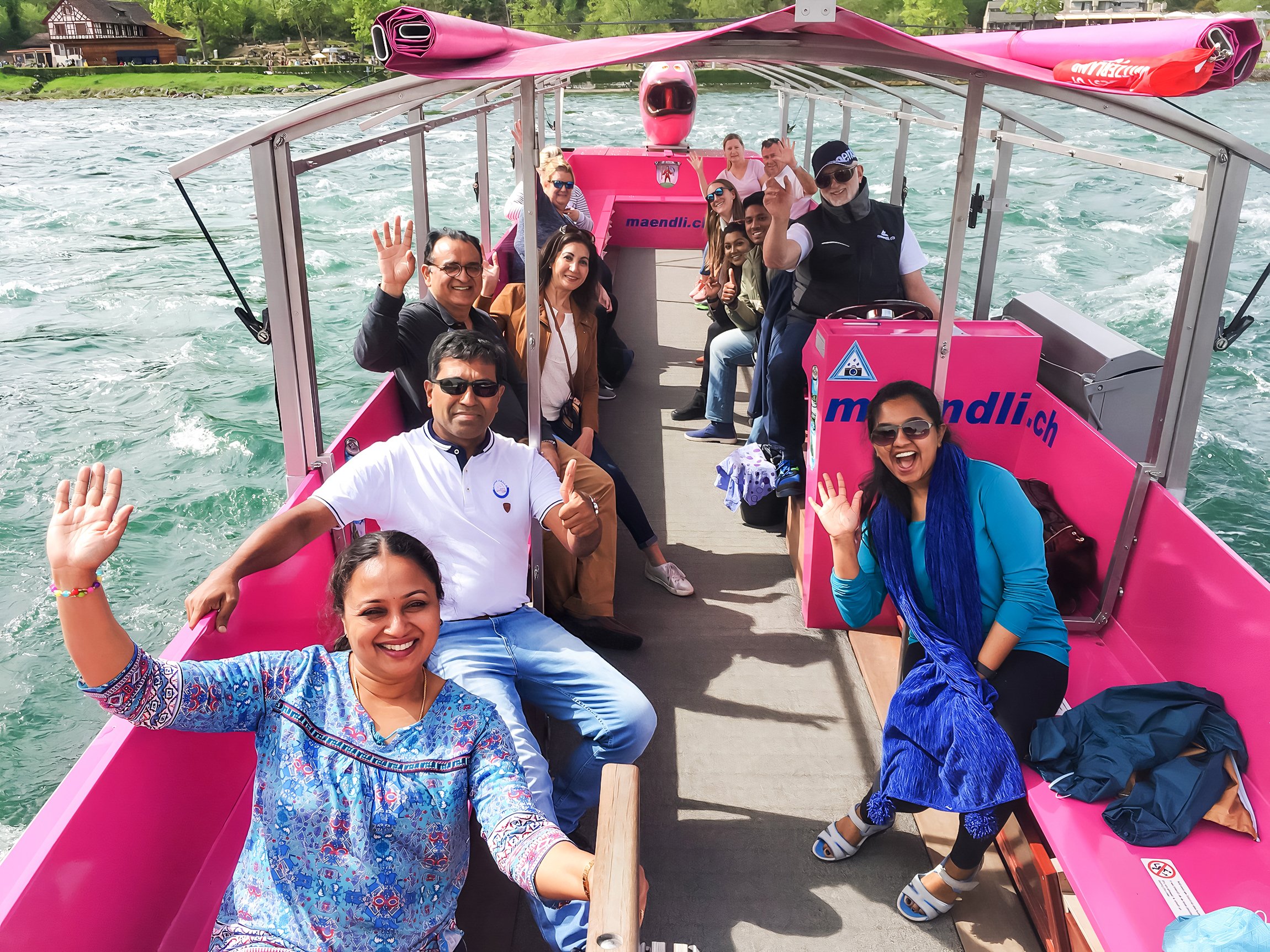
A boat tour is a highlight of any zurich to rhine falls trip, allowing you to stand in the middle of the falls.
Yes, the train is the most efficient way to travel from Zurich to Rhine Falls.
The best arrival window is 00:00–23:59 to avoid peak crowds and capture optimal lighting.
A historic castle located on the northern bank overlooking the water.
A historic town center with various hotel options near the train hub.
Join thousands of happy travelers who have discovered this incredible experience
Book Your Experience Now